
Core inflation

US inflation remains elevated, but the picture depends on where you look. Headline Personal Consumption Expenditure (PCE) recently stood at 3.8% in April, while core PCE – excluding food and energy – tracks at 3.3%, reflecting more persistent price pressure above the US central bank’s long-term 2.0% target rate. The difference matters, because energy and food prices can swing wildly – sometimes spiking above 30% or dropping sharply – while core inflation moves more smoothly. This volatility is why the Federal Reserve focuses on core measures when setting interest rates. Monetary policy works with long and variable lags, often taking years to influence the economy. Reacting to short-term oil or food shocks would risk policy mistakes. Therefore, despite the freshly announced peace deal between the US and Iran pushing down energy prices, new Fed chair Kevin Warsh is unlikely to announce a reduction in interest rates at his first meeting this week.
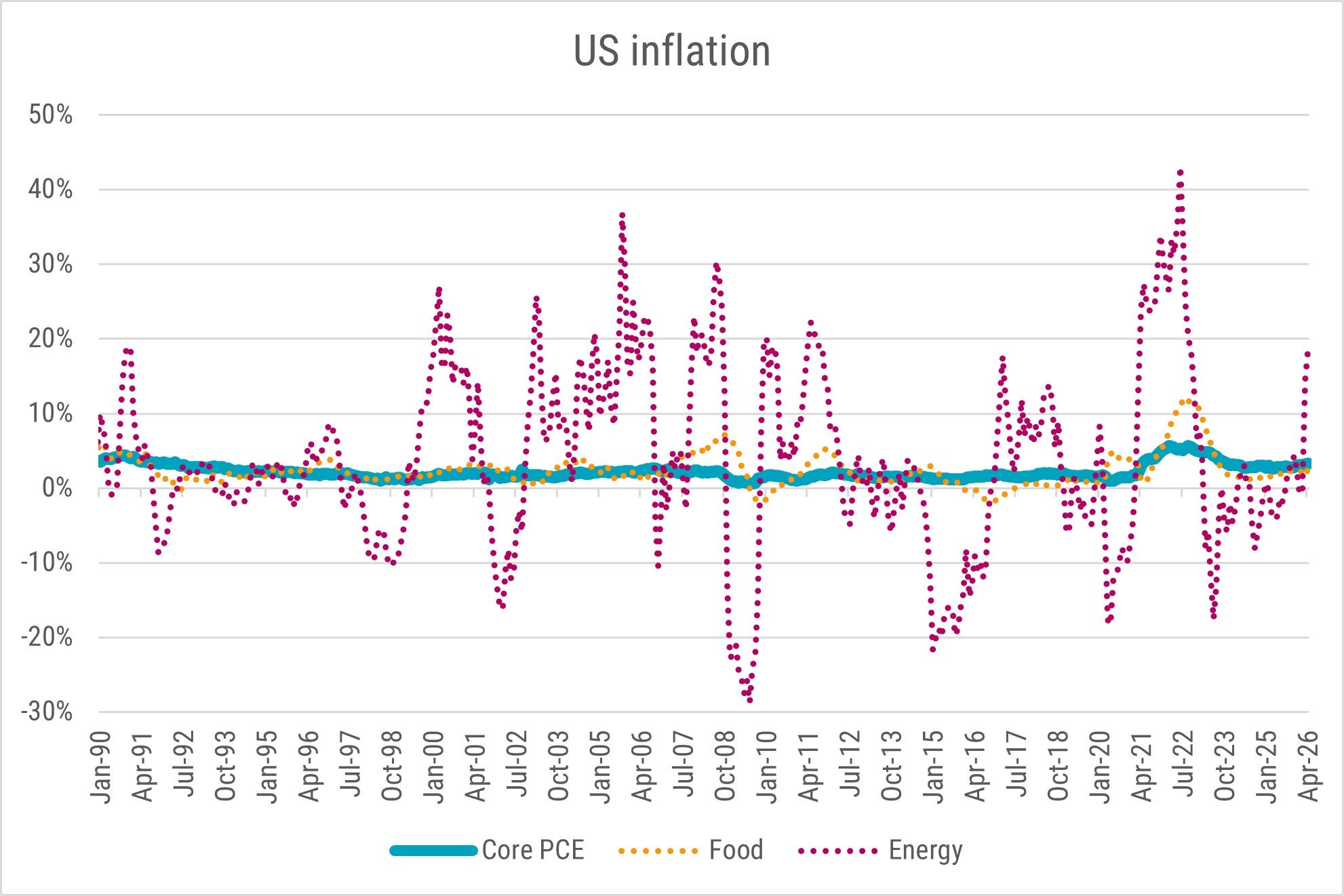
Source: US Bureau of Economic Analysis, June 2026.