
Rare earths

From the electric motor in your EV to the turbine spinning offshore wind, rare earths are the hidden ingredient. They are also woven into military hardware – radar systems, guided missiles, fighter jets. In that sense, they are less like a commodity and more like a strategic asset. China’s dominance is not geological luck – it’s the result of decades of deliberate investment in mining infrastructure and processing capacity that no other country has come close to matching. Other nations sit on vast reserves: Brazil holds 23%, India, Vietnam, and Russia each hold meaningful shares. But holding the geology is not the same as controlling the supply chain. For the United States, this gap is acute. American demand for rare earths – driven by defense, energy, and consumer electronics – is substantial, yet domestic production remains limited. Washington has in recent years ramped up investment through legislation like the Inflation Reduction Act, defense procurement rules and price floors to onshore processing capacity. Allies like Australia and Canada are being drawn into the conversation as friendly suppliers. Still, the infrastructure gap could take years to close.
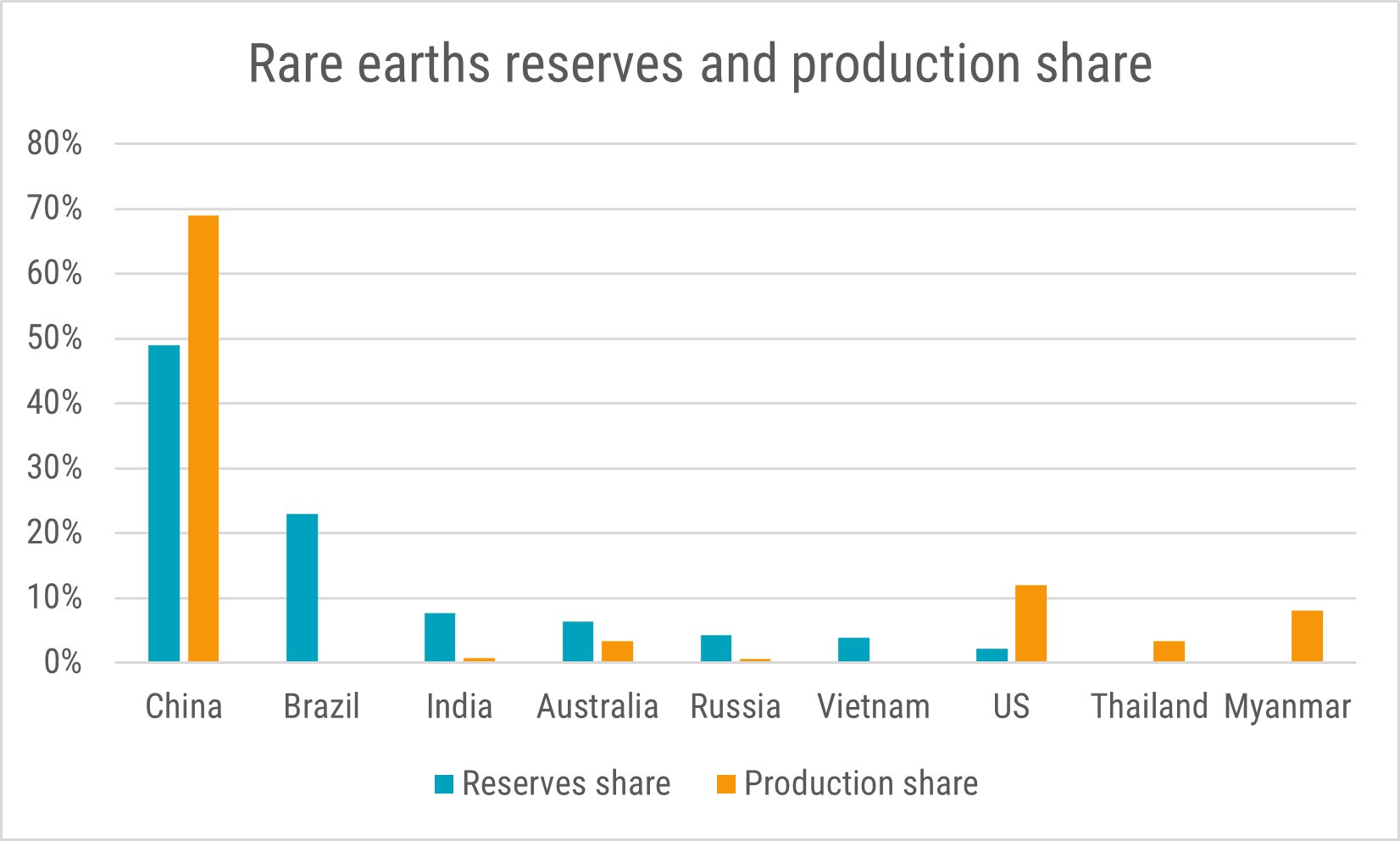
Source: US Geological Survey, 2025.